Thursday, May 31, 2012

Chapter 26: The Kitten Tamer Cometh

Boris listened with his mouth open in amazement. The tall curly-haired woman in his backyard was speaking into her phone, as she dropped a backpack in the grass next to the nest of squirming kittens.

"It looks like a TNR," said the woman into the phone. "I have five kits, three tuxes, two ginger tabbies. Can you call ShelleyBell and tell her we need a trap and an appointment at PFP?  Thanks."

The woman put her phone into the pocket of her fleece jacket, and pulled on surgical gloves.

"You're the homeowner, right?" she said to Boris, the slight twang in her speech suggesting she wasn't a New Jersey native.

He nodded.

"Well, as you can see, we have a situation here," she told him. "A real situation.

When Boris heard Joe suggest that he call the Kitten Tamer to handle the brood of kittens next to the carriage house, his first thought was that Americans were too gullible to be trusted with their own destiny. Kitten Tamer? A specialist for kittens?  People pay for this?

But then he considered that maybe this is what people did in Orange Heights when they had kittens on the property. He didn't know any better. His instinct was to ignore them, but maybe they damage property, he thought. Could kittens infest the carriage house? Would that be a bad thing?

Finally, curiosity won.

"What's a Kitten Tamer?" he asked Joe.  "Is this an online thing?"

"She's a lady," said Dylan gravely. "She'll take the cats away and give them baths."

Again, Boris was struck by a wave of frugal cynicism, thinking of the 5 bathrooms in his house.

Joe rushed in to clarify. "She comes, traps the cats, and tames the kittens. Then she can find them homes. The mother cats are neutered and then released, so you don't have this again next year.  Or next month," he said.  "You know how they are."

Boris nodded knowledgeably.  "Do we need to get rid of cats?" he asked, trying to sound casual and philosophical. "Will they, ugh, burrow into the ground and weaken the foundation of the house?"

Even as he asked, Boris realized the question was absurd, and both Joe and Dylan laughed.

"These kittens?" asked Dylan, pointing at tiny squirming balls of fur.

"No," said Joe patiently. "But trapping them and finding them homes is the right thing to do. And it doesn't cost anything. She does it as a volunteer."

So just a while later, long enough for Boris to put on a t-shirt and warn Naomi, the Kitten Tamer arrived in a Subaru station wagon filled with boxes.

"By the way," she said, striding into the back yard, "I'm Jillian."

Boris introduced himself and wanted to introduce the neighbors now gathered to watch the action. He forgot -- if he had ever known -- their names so he looked helplessly at Joe.  But Joe was staring at Jillian as if he had never seen anyone as riveting as the tall woman now wearing purple surgical gloves.

Moonstruck, thought Boris, in broad Saturday sunshine. Lovestruck.

He turned to Dylan, who took the situation in hand. While Joe stared at Jillian and Boris watched Joe, Dylan recited the neighbors' names.

Jillian, the Kitten Tamer, nodded her thanks. "Okay, buddy," she said to Dylan. "Let's catch these kittens."


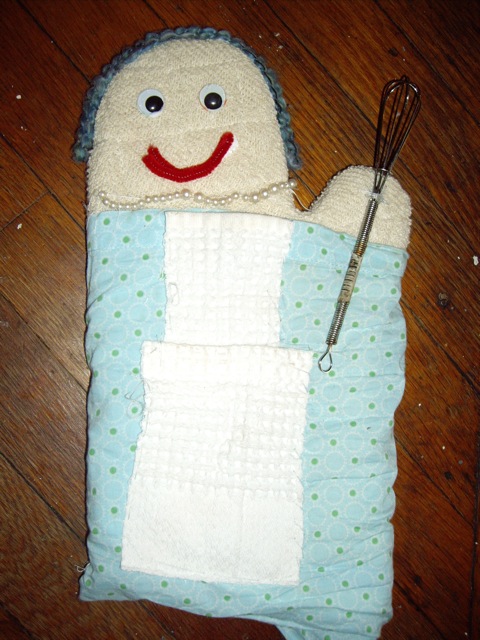


The BearBunnygate

I notice that stuffed animals are prevalent in this wonderful saga. I normally have no interest in that sort of thing, until I noticed the symbolism. The Animals (FYI: there are 2 "Bears, " kind of confusing) seem to represent comfort. Or safety. Either way, they are something children need to feel secure. I don't know if this is concsious or not, but its very interesting.

Guest post by 13-year-old reader

Wednesday, May 30, 2012

Chapter 25: The Kitten Tamer of Orange Heights

By Saturday morning, this first weekend in June, roses bloomed up and down Orange Heights Avenue. But, just as certain as the sunny days meant prying open wooden windows that had been closed all winter, it meant the neighborhood stray cats produced new crops of kittens.  Dylan and Joe and Cole's dog, Daisy, were the first to discover the annual litter of orange tabbies and black and white tuxedos.

Dylan was counting the Belgian blocks between his driveway and the far end of Naomi and Boris's driveway, which was as far as he was permitted to walk alone.  When Joe came outside to walk his dog, Dylan joined him without a word.

Joe and Dylan walked in companionable silence, each thinking. Joe was considering his Match.com options, dozens of women who had responded to the ad his son Cole wrote and Joe posted earlier in the week. He was overwhelmed even when he started to chart each of the entries, awarding each woman points for her replies.

"I hate to do it that way," he told Dylan, without explaining. "But I know how to quantify, to do stats, you know?"

He looked down at the boy, busy counting something visible only to himself. "I know you know," said Joe.

"See," he continued, as Dylan looked up at him. "I can calculate RBI and a batting average without, well, batting an eyelid. But I don't know what I want in a woman, how to calculate the perfect match."

Daisy, the old golden retriever walking companionably behind them, suddenly took off with a throaty bark, running to the side of Naomi's carriage house-garage. The dog sniffed in the long grass until Joe and Dylan caught up with her.


"Kittens," said Dylan and Joe nodded. The two looked down at a nest of fur and listened to the faint but anxious mews.

Life on Orange Heights Avenue was good for people, thought Joe, but not for kittens.  Behind Naomi's house on the dead end were woods where residents came to let their dogs roam off their leashes. A coyote was thought to prowl at night, too.  The mother cat was no safer than her kittens, he realized, equally vulnerable to attack and to illness if she ate trash.

"I like them," said Dylan. "There are five, two yellow and three black."

"I like them too," said Joe, crouching down to better see the cats and talk to they boy. "And I know how to keep them safe."

The little boy looked at Joe.

"What we need to do," said Joe gravely, "is call the Kitten Tamer of Orange Heights."


Tuesday, May 29, 2012

Chapter 24: Guess Who's Coming to This Old House

The scream that Maureen heard was more of a shriek, or so Naomi told herself. She opened her email after the eventful morning when she was locked in her own basement.

Chapter 30: Gemma WanderLust Comes to Town

Gemma WanderLust in Concert!

NJPAC
Newark NJ

One Night Only!
Tickets on sale now at the Box Office
or online at: njpacc.org

Grammy-award winner debuts songs from her new album "Lust for Life"

Saturday, May 22, 2010

Chapter 23: Your usual scream

That was fast, thought Maureen, as she recognized Naomi's scream. How could it be that a new neighbor, less than a week on the Avenue, could be facing peril again, such that she would scream for help and be instantly recognizable?

Maureen had been dozing in a green plastic lawn chair, contemplating her tomato plants, when she heard Naomi. The Friday afternoon was warm, reassuring to Maureen, who had planted her tomatoes and peppers the week earlier. Though she never put it into words, and rarely into thoughts, her garden was important. The spring planting, the summer watering and waiting, and August bounty of tomatoes and peppers reflected order in what often looked like a random and chaotic universe. While each summer brought a challenge -- bunnies, blight, the groundhog Dylan had named Garth -- there was a certainty to the process. Seeds, sun and water yielded plants. No more, no less.

The garden plot was the same each year, the same sunny side of the yard that her grandfather had planted before her, staked out when Orange Heights was a smaller town, and very different. In the 1930s, when her great-grandfather worked for the railroad, the family lived next to the tracks. When the train whistle blew, her great-grandfather rushed out of the tiny house to release the barriers on Orange Heights Avenue, which stopped pedestrian and horse traffic and allowed the train to pass safely. The rush of the train's iron wheels on the metal tracks rattled the windows of the house, and the downtown noises of horses, carriages, and trade meant noise, always noise. No wonder he sought another neighborhood, once he had a dollar or two in his pocket.

Maureen listened for sounds from within her house, knowing that her mother was resting and Dylan dozing in front of television after the morning's adventure. Nothing.

She looked for smoke rising from Naomi's house. Nothing.

Could one woman be caught twice in the same day in her own basement, wondered Maureen. And if so, what could she, Maureen, do about it?

Nothing, she told herself, settling back into her lawn chair. She made herself comfortable, ignoring the tiny flare of conscience from within.

"She's okay, I'm sure," said Maureen aloud to a passing stray cat. "What could go wrong on Orange Heights Avenue?"

Wednesday, May 19, 2010

Chapter 22: Cole and Bounce

Home from school that afternoon, Cole took milk and a sandwich to his room and closed the door. His cell phone and iPod remained downstairs, where their temptations were out of sight. Likewise, he yanked the cord that connected his computer to the virtual world, and started up a word-processing program. He lay on his bed to eat and contemplate the ceiling.

Cole reached under his bed for a book, a review copy he found on his father’s desk downstairs. Cole studied the yellow cover, and the red script that read “Bounce.”

He had picked up the book hoping for a racy read, but it wasn’t that: the book was written by Matthew Syed, medal-winning table tennis player who looked at the competition and realized that most of it came from the neighborhood where he grew up. Looking for an explanation, Syed concluded that much great success -- whether athletic or artistic -- resulted from opportunity meeting relentless practice. The author, read Cole, saw 10,000 hours of practice as a reasonable minimum for achieving success.

“No shit,” said Cole aloud, no stranger to long practice.

Cole learned years earlier that part of the secret of cool was focus, focus on one aspect of life at a time. He saw this in the athletes that his father profiled, boxers who worked on punch for a month, or a golfer who refined her swing for a season. The best athletes worked dispassionately, putting aside ego to focus on the task at hand. Then, once the swing was perfected, the same athlete would move onto the next technique. The very best strengthened one weakness at at time.

Likewise, Cole considered the skills for leadership success in high school, listing them aloud as he lay on his bed.

“Academics, social mobility, appearance, athletic prowess, knowing everybody’s name, doing good stuff like charity, and crazy self-confidence,” he said to the ceiling.

Sure, he saw other avenues to success, by way of writing, the arts, maybe running for an office. Those weren’t his skills, though, or his interests, so he put them aside, and focused on what he could do well.

What Cole also learned by observation was that without academic success, all other social gains in high school were like a castle built on quicksand; failure, especially public failure, could bring down the edifice. He did schoolwork and homework diligently, rarely complaining -- what was the point and who had the time? -- rarely passionate about the subject matter.

When Chemistry meant finding logarithms, he did so. He practiced a dozen at a time until he could effortlessly demonstrate in class. Spanish asked for the future subjunctive, so Cole did the exercises in the back of the workbook until he knew it cold, then tore the pages out. For part of his strategy was to keep such efforts under wraps.

Cole opened the book at random and read about David Beckham, now a supermodel as much as a soccer player, who spent days of his youth practicing the kick that made him famous. This made sense to Cole; how else could you convince the world watching that your achievements were effortless unless you worked hard and long hours? The trick to high school, thought Cole, was keeping those efforts a secret.

Daisy scratched on Cole’s bedroom door, so let her in and scratched her head. She licked the last sandwich crumbs from his hand.

“Here’s what I want to know,” he told the dog. “How did those guys know which thing to do? Which sport or whatever to pursue? Which is mine?”

The dog sniffed the floor, looking for more crumbs.

Cole turned to his computer and considered the list of assignments that he had posted. Calculus, check.
Spanish, not due for a week.
English, Act II of Hamlet, done.

What loomed was a History project, an architectural scavenger hunt, where the class had to find Ionic and Doric columns, Rosettes and even limestone artichokes in local buildings. The task included locating and photographing the elements, describing them fully, and connecting them to the ancient world. It was, as Cole told Daisy, “a shitload of work.”

But it had to be done, so Cole picked up the assignment sheet and walked downstairs. He took a digital camera from his father’s desk and headed to the end of Orange Heights Avenue, closely followed by Daisy.

“That shit-crazy house has all kinds of columns,” said Cole. “Let me get a couple of these checked off my list.”